Engine building
Blueprints, measurements and build sheets
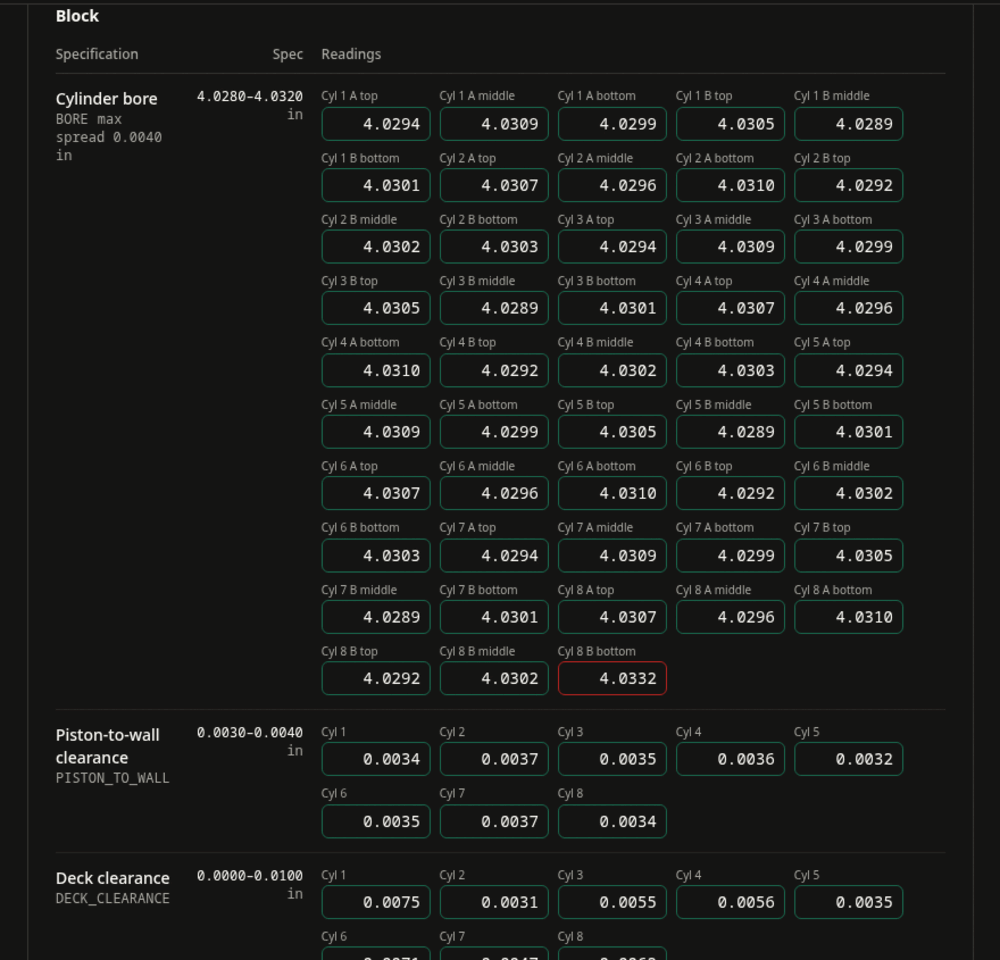
Every number you take has somewhere to go, checked against the spec for that build. Then it prints as the document your customer keeps.
What you can record
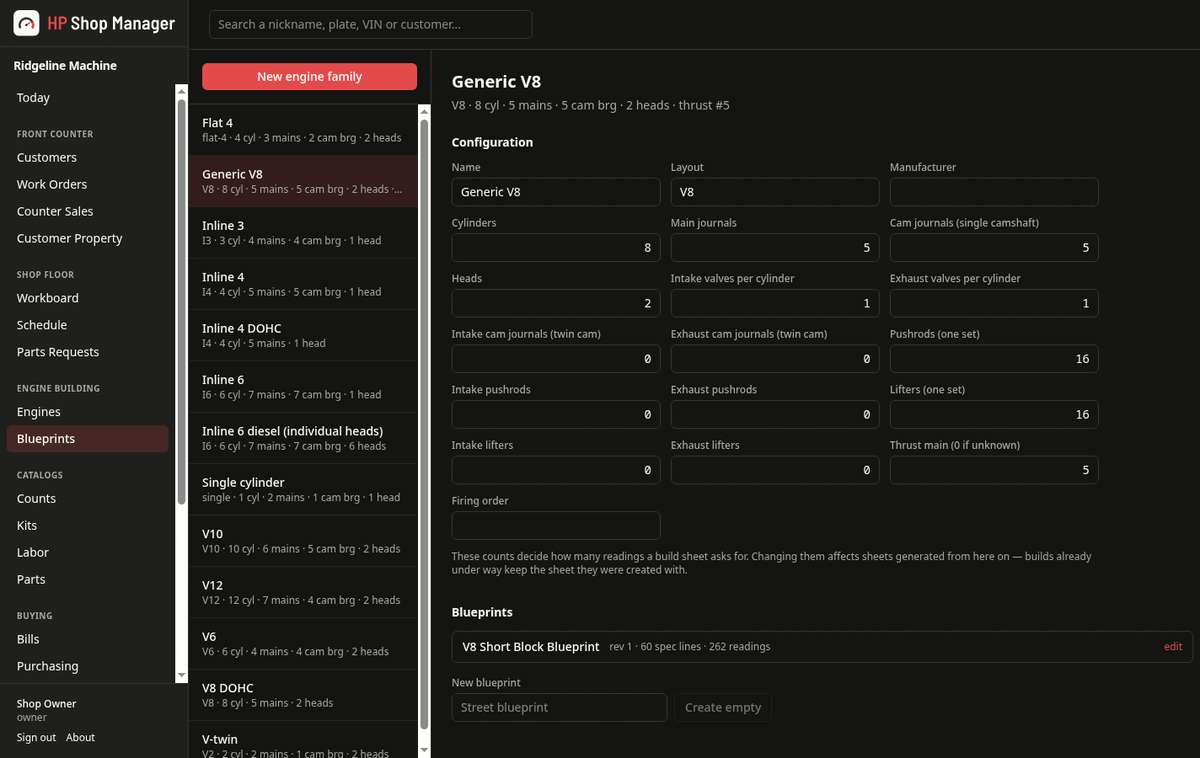
Set the blueprint once for an engine family. Every build takes its own copy.
- Block and crank
- Main and rod journals, bores, deck height, crank end play.
- Camshaft
- Tunnel bore, bearing clearance and end play, per journal, to four decimal places. A twin-cam engine counts its intake and exhaust cams separately.
- Cylinder heads
- Installed height, seat and open spring pressure, and the shim — per valve. A four-valve head gets sixteen rows, not eight.
- Valvetrain
- Pushrod length and lifter bore, per side when the two sides are not the same. An overhead cam engine is never asked about pushrods.
- The parts, not just the numbers
- Solid or oil-fed. Chromoly or aluminum. What stops the lifter turning. Half of an engine is a choice, and choices belong on the sheet too.
- Anything we missed
- Add your own. These engines are modified well past stock and the list will never be complete.
The engine remembers
- Find it by its name
- The nickname the customer uses, not a plate number. Three years later it is still there.
- See what moved
- Open an engine that has been in before and see each measurement across visits, biggest change first.
- Photos on the job
- What the block looked like at intake. The crack somebody will want to discuss in a year.
- Comebacks that cost something
- Warranty work is linked to the job that caused it, so you can see what it is costing you.
Set the blueprint once
An engine family says what a build sheet should ask for. Every build takes its own copy.