Purchasing
Buy it once, at the price you were quoted
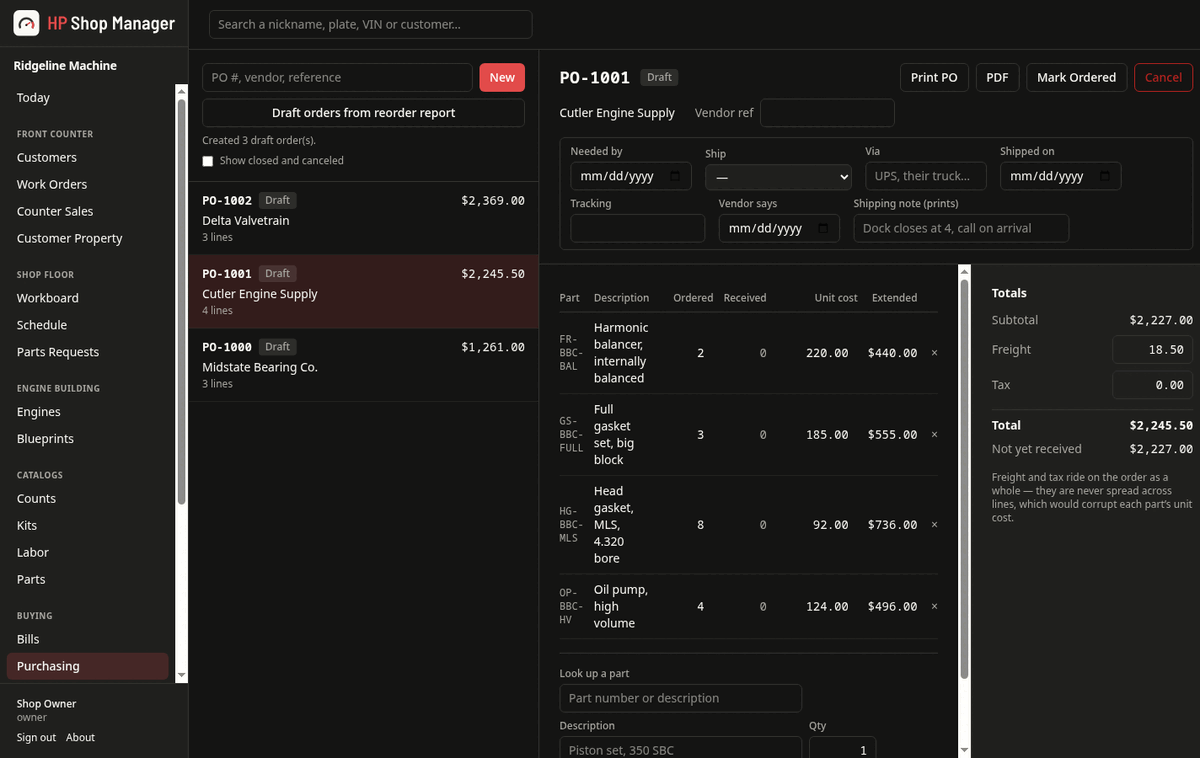
Your shortage list becomes the purchase order, and the supplier's bill gets checked against it.
Ordering
- The shortage list writes the order
- What is below minimum, grouped by supplier, with a suggested quantity. One click turns it into draft orders.
- Orders that print properly
- Ship-to, needed-by, carrier — and for a part being made to a spec, the numbers the grinder needs.
- Receive what turned up
- A partial delivery stocks what arrived and leaves the rest outstanding.
- What each supplier charges
- Their price for a part and what you have bought before, so you are not quoting off last year.
Money going out
- The bill against the order
- A $4,090 order that arrives as a $4,180 bill shows up as a gap instead of disappearing into a cost.
- Returns to the supplier
- Stock leaves when you send it, and the credit is tracked until it actually lands.
- Cores, both ways
- Charged with the part, credited when the old unit comes back, and chased when it goes the other way.
One order per supplier, raised for you
The shortage list found ten parts short across three suppliers and wrote three draft orders.